Beyond TRIR: Why Serious and Fatal Injury Rates Aren’t Falling With Overall Incident Rates
Ray Master
May 4, 2026
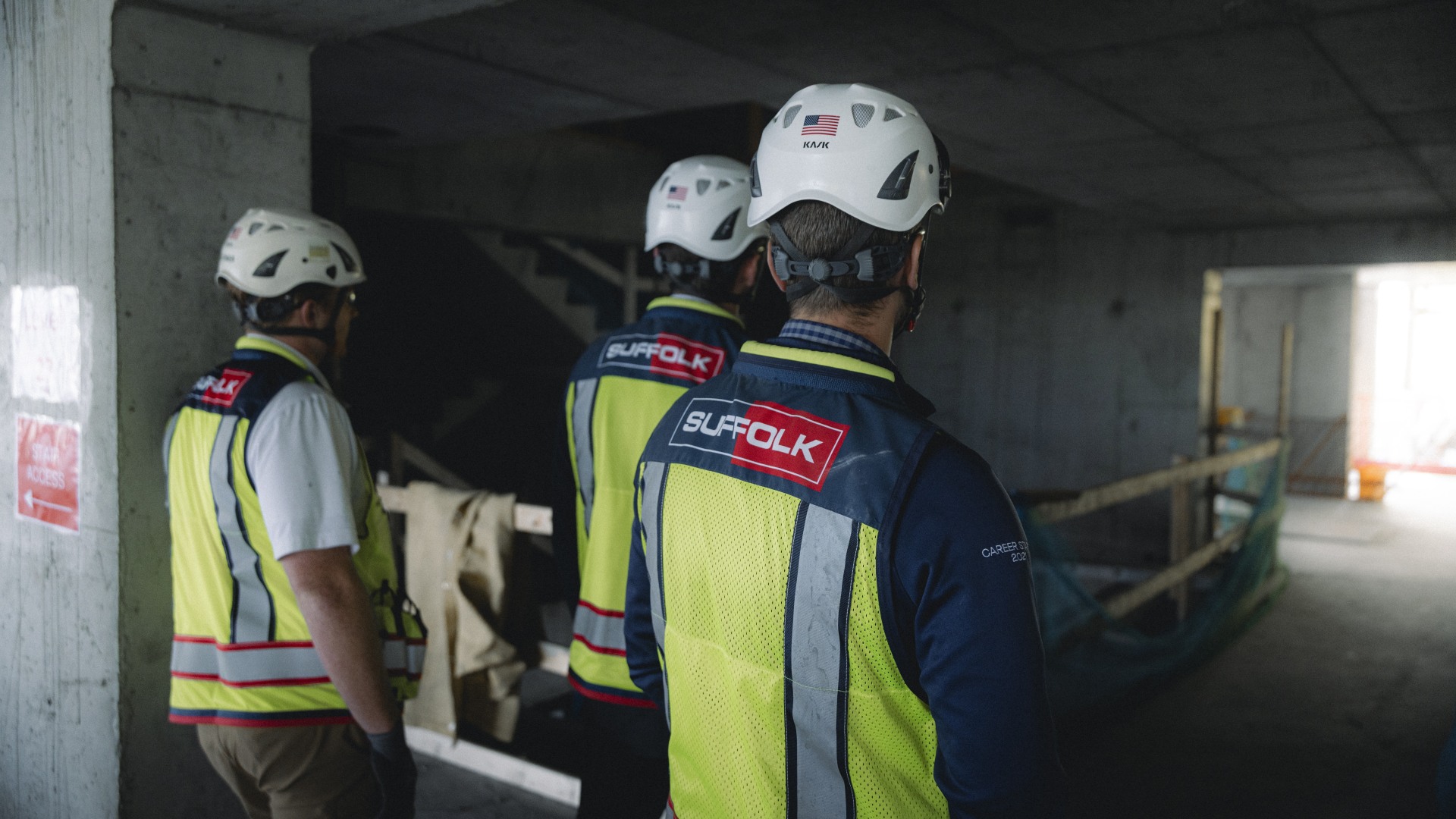
Our TRIR is the lowest in company history. We're proud, but not yet satisfied.
Total recordable incident rate (TRIR) measures how frequently workplace injuries occur, and in 2025, Suffolk’s TRIR stood at 1.01 — the lowest in company history. But industry data shows a troubling pattern: even as TRIR falls, serious injuries and fatalities (SIFs) in construction have stayed flat or, in some cases, increased. Frequency and severity, it turns out, are not the same problem — and that distinction is reshaping how we think about jobsite safety.
Thanks to a data-driven, technology-forward jobsite safety approach, Suffolk has made significant progress in reducing our TRIR. We’re rightfully proud of that accomplishment, since it translates to actual lives impacted. But part of the Suffolk DNA is refusing to settle for the status quo. So, in the spirit of partnership that comes with Construction Safety Week, we’re setting our sights on an unsettling and persistent industry trend: that although we’ve seen the frequency of incidents decrease, serious and fatal incidents in construction continue to occur at a regular rate.
As today’s construction industry faces significant challenges centered on severe skilled labor shortages, high material costs driven by inflation and tariffs, and the slow adoption of technology, we see companies trying to do safety harder: more control, more rules, and more discipline. Unfortunately, evidence shows us that this approach is not working. While we continue to see a drop in high-frequency, low-consequence incidents (i.e., lower TRIR), we see that SIF outcomes are not changing. In some cases, they’re increasing.
Since we’re always looking at ways to redefine how we build at Suffolk, we’re rethinking our accident causation models to better match how work — and the nature of risk — is changing. Here are some emerging ideas that we’re exploring.
- Resilience engineering: A safety approach that focuses on how project teams can anticipate, monitor, respond to, and learn from disruptions in order to maintain operations. Most of the time, our work goes right — so what are the mechanisms we can put in place to learn from what goes right, not just what goes wrong?
- Energy-based hazard recognition: A proactive safety method that focuses on identifying, controlling, or eliminating the 10 primary energy sources (e.g., gravity, electrical, motion) that cause serious injuries. Workers on construction sites typically identify only about 45 percent of hazards on their own. One tactic companies can adopt to improve that number is the Energy Wheel, an industry-wide tool that categorizes the primary energy sources with the potential to cause serious harm. Research has shown that introducing the graphic into existing safety processes, such as pre-job planning, increases hazard detection by 20–30 percent.
- Practical drift and normalization of deviance: The slow, often unnoticed uncoupling of actual work practices from established safety procedures, where regular deviations from safety protocols become normalized and ignored. What are the ways we can notice and disrupt drift before it becomes the norm?
- Rethinking human error: What if we shift our mindset so people are seen as a project’s greatest asset, rather than problems to control? Do we have the courage to see human error not as a cause, but as a reflection of our culture and project management style? With this approach, when incidents do occur, we can tailor our response with a more intelligent and restorative form of accountability rather than creating more victims.
- High reliability organizations (HROs): Organizations that operate in complex, high-stakes environments without catastrophic failures share identifiable characteristics. How can we adopt some of those characteristics into our own organization and teams? That exploration is built into our Lessons in Leadership series, with immersive experiences that draw on the history of locations like Normandy, Gettysburg, and West Point to inform our work at Suffolk.
As we always do at Suffolk, we’re challenging our default thinking and long-held beliefs, incorporating new thinking, conducting safe-to-fail experiments, and constantly keeping the conversation alive. What’s emerging is a means to address safety on our construction sites in a manner that is uniquely Suffolk — and one that can support our industry clients and colleagues as they invent their own versions.