People & Culture
Building Culture at Scale, Part 2: From shooter to point guard
Katy O'Neil
October 1, 2026
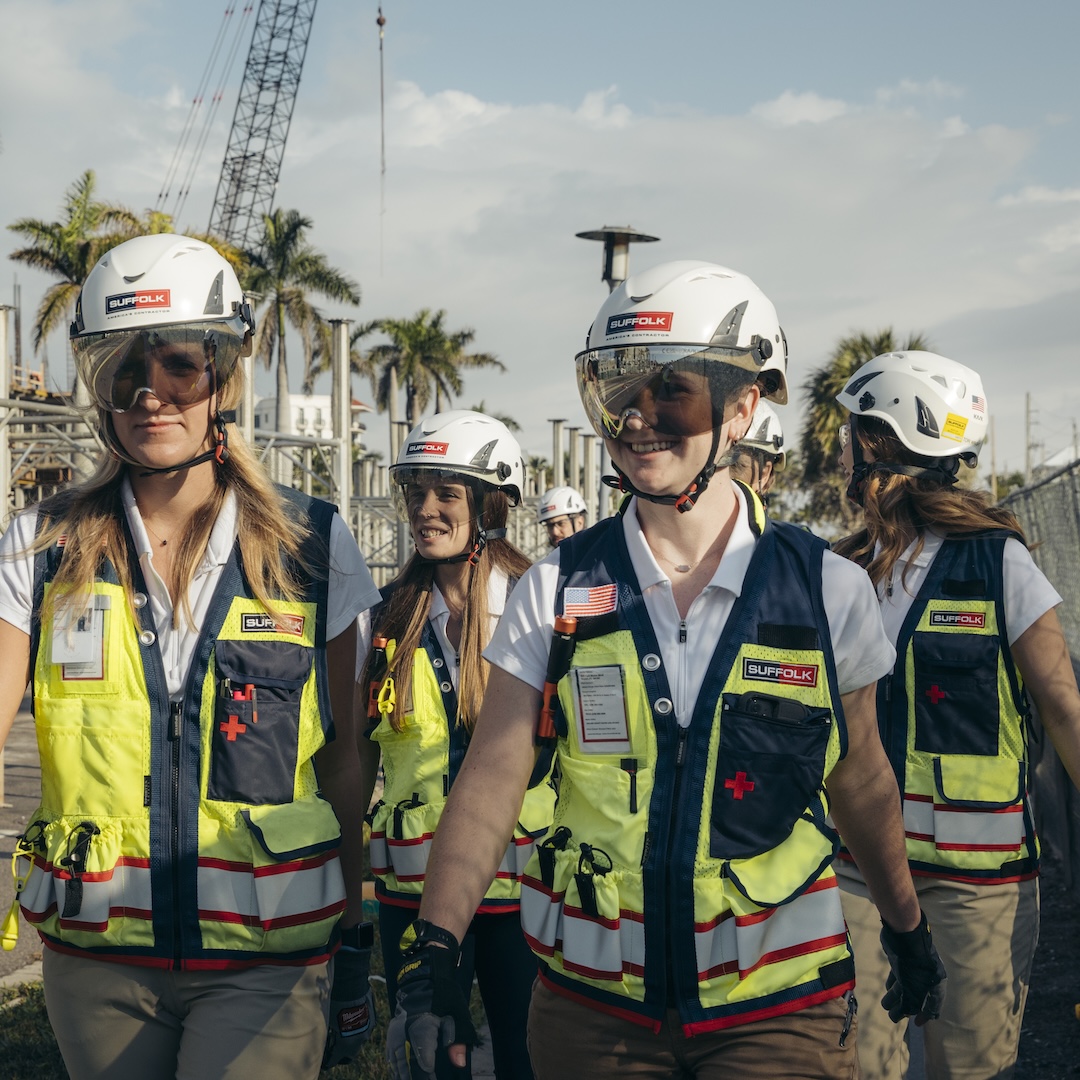
The second in a series about maintaining Suffolk’s culture as the company scales
Playbooks are incredibly helpful guides in both sports and business. I shared in my last article how we created our own version of a culture playbook, and it’s played a key role in strengthening Suffolk’s culture as we continue to grow. But when the game is on, the project is pushing toward a milestone, or a team needs a boost, the book isn’t physically making the play. Our people are.
When we saw the pace of Suffolk’s growth, we realized we needed to equip even more strong leaders throughout the organization to step up to the plate. The culture guide was a foundational element of that approach, but we also wanted these leaders to feel confident in Suffolk’s processes and systems. Because at the end of the day, we couldn’t scale excellence by asking great people to try harder. We had to scale it by building people and systems that compounded.
Think of how it works on a basketball court. Shooters create value by taking the shot. Point guards create value by running the floor. They see the whole picture, anticipate pressure, pass responsibility early and build confidence through real repetition. Sure, scoring in the clutch still matters, but really, the team needs someone who knows the offense by heart.
That’s who we want our leaders to become as we scale. We want them to move beyond early-stage leadership — stepping in, solving problems, being indispensable — to an effective, point guard-style standard where they run the system. In that model, effectiveness looks like a strong team working under them, quality decisions made without them, and high performance when they’re not in the room.
Reaching that standard means trusting them to show up as Suffolk culture carriers, and we build that trust through intensive, high-impact programs for rising leaders. For example, our Executive Leadership Program focuses on developing an enterprise leader mindset, increasing business acumen, learning to learn, servant leadership concepts, and a transformative capstone experience at the United States Military Academy at West Point in partnership with Thayer Leadership. In our most recent cohort, 32 emerging executives spent three days exploring the tenets of leadership with retired officers of the U.S. Army about how to build a leader culture, lead high-performing teams, address the challenges of a volatile and complex environment and build trust. And in May, 28 Suffolk superintendents visited Gettysburg to explore what the historic Civil War site can teach us about leadership today. Participants spent time in the classroom unpacking how concepts like “the high ground” and “the left flank” shaped the Union Army’s successful leadership strategy and visited McPherson’s Ridge, Little Round Top, and the Soldiers’ National Cemetery during battlefield tours.
In every one of these programs, we give them the tools they need to succeed as culture carriers, creating shared rituals and language and ensuring our leaders feel connected to the larger company. With that, they have the power to make culture personal to the people on their teams — in every region, on every remote site.
Our point guards are building a winning strategy that scales. And at the same time, we’re finding novel ways to connect with the rest of the team so they feel heard and understood at every level. That’s for next time.