Innovation
We’re calling 2027 the year of the manager. Here’s how AI is making that possible.
Dan Collier
October 19, 2026
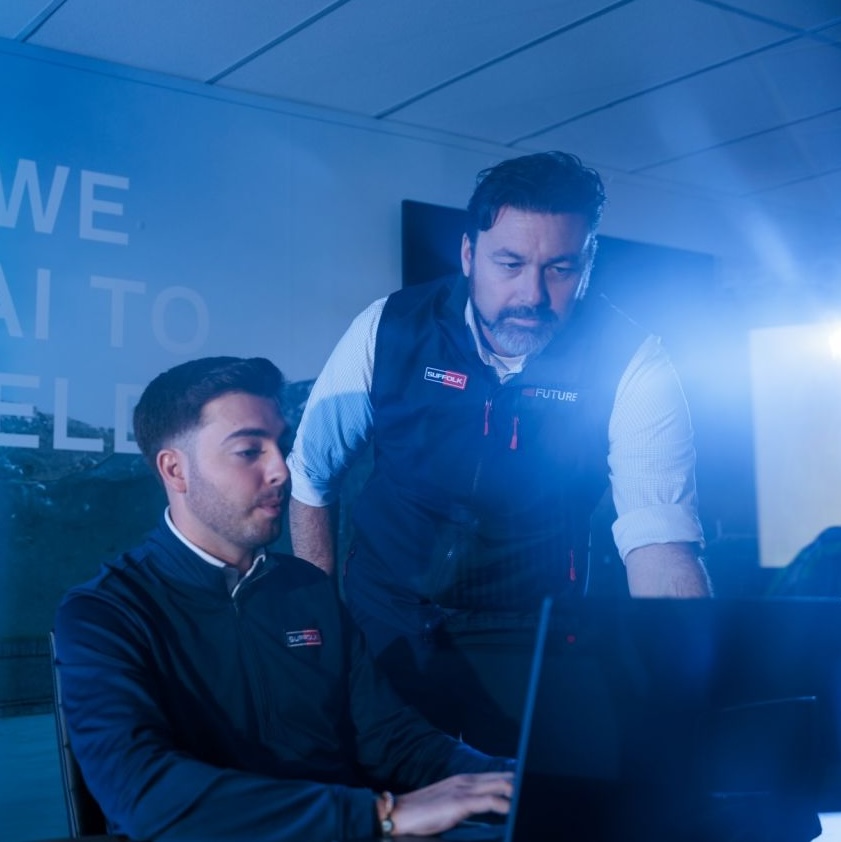
Once upon a time, managers were the main people who determined the right training program for their team members. Over the years, as organizations like Suffolk have grown in size and scale, we’ve come to rely more on online platforms to teach our people. But that technological dependence creates its own set of drawbacks — less individualized learning, less relevance to the work, and fewer personal connections. Now, with AI-enabled tools, we’re actually finding ways to bring learning back to the managers.
Here’s an example. Red & Blue University, our comprehensive suite of learning and career development offerings at Suffolk, has a host of video-based technical training, instructor-led trainings on key processes, resources like our operations playbook and much more. Right now, new hires receive a comprehensive learning plan that covers all the basics, but it’s not necessarily tailored to their exact role or the status of their current project. We’re exploring an AI tool that makes it possible for managers to input the new hire’s experience, position and the project status; with those data points, the tool will pull the correct on-demand programs within Red & Blue University and recommend who the new hire can partner with on the job for tailored learning throughout their first few months.
It’s a truly individualized plan that has benefits for employees, managers and Suffolk as a whole.
- The employee: They have a more relevant learning plan, with the right information at the time they need it. It also reduces scrap learning, which is the information that a subject matter expert might share in a training but doesn’t pertain to the employee where they are. With these AI tools, we can slice up the content for a variety of users.
- The manager: They’re more involved in determining what their reports need, and they have tools to better understand how to develop their people and connect them with resources.
- The organization: The enterprise as a whole becomes much more agile in how learning happens. If more people learn what they need when they need to know it, that knowledge becomes more actionable and boosts performance.
AI is having other benefits for our Red & Blue University programs. Three years ago, we built FASTsuper, an award-winning curriculum for superintendents. The program was so successful that we expanded it to FASTpm for project managers, but a large portion of those two programs is redundant. AI is helping us sift through both curriculums and their learning objectives to dig out the repetition and position the learning so it’s easier to digest within specific roles. And in our leadership development programs, where we practice tough conversations through role play, AI is helping us write those scenarios. With the extra time that they don’t spend writing, our subject matter experts can focus on direct practice and coaching for our managers.
All in all, AI is helping us create tighter partnerships between our operational teams and our learning experts, and it’s putting processes back in the hands of our people managers. That might not be the result that people expect, but it’s what we’re discovering — a more efficient, effective, and people-centered approach to learning.