Why Commissioning Is Critical to Resilient, Sustainable Hospital HVAC Systems
Brian Morrissey
January 13, 2026
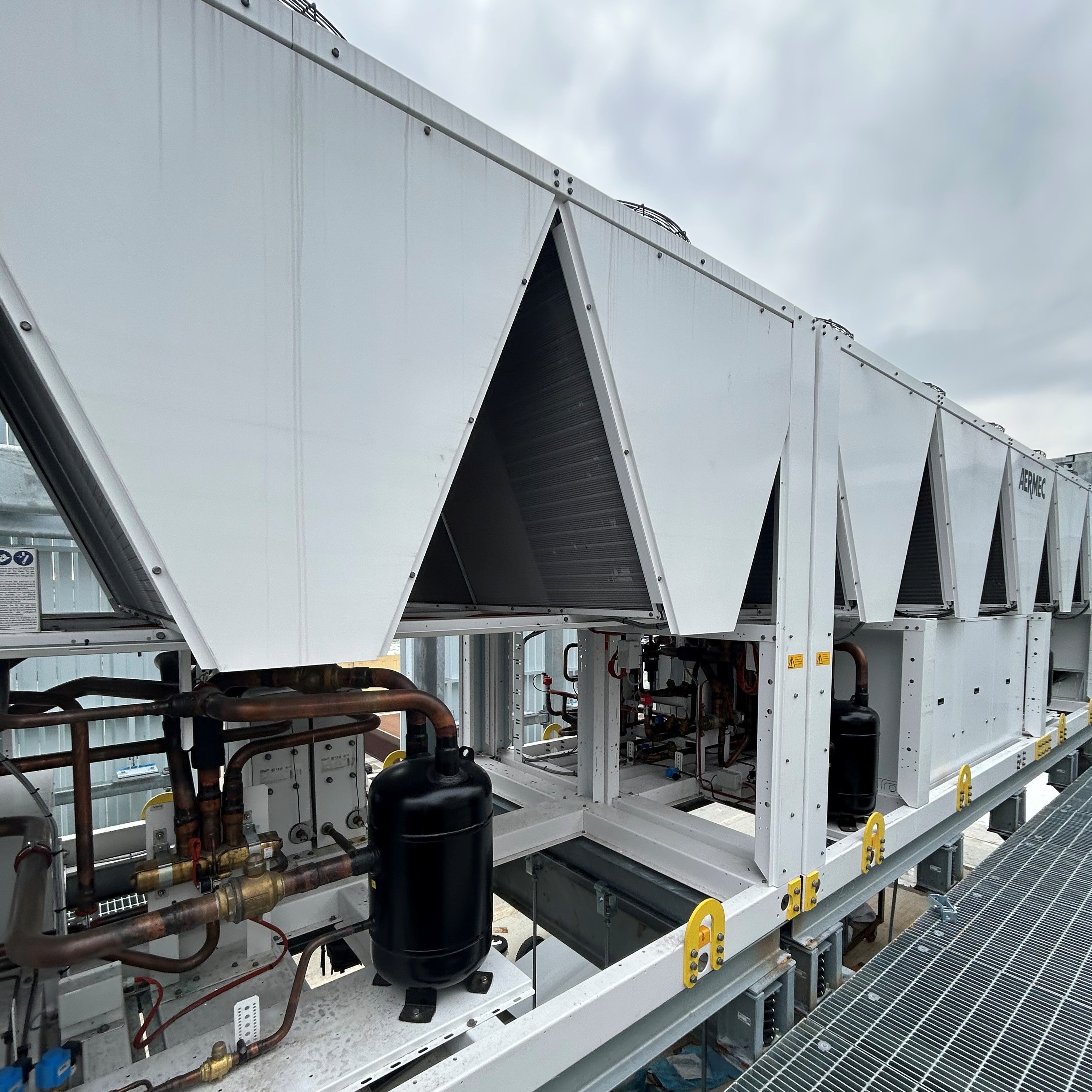
When equipment needs to work all the time, every time
Commissioning is the process of testing, verifying, and fine-tuning a building’s systems to confirm they operate exactly as designed — and it’s the difference between an environmentally friendly system delivering on its promise or falling short when it matters most. New, environmentally friendly mechanical systems like air source heat pumps can have significant benefits for New York healthcare institutions, but those benefits depend entirely on how well the systems operate. We’re driving a robust approach to commissioning to ensure resiliency for these lifesaving environments.
Hurricane Sandy occurred more than 13 years ago, but its impact on New York infrastructure — especially our hospitals — reverberates today. Because of power outages, equipment interruptions, and floodwaters traveling to critical floors, resilience became top of mind for our healthcare institutions. Our Vice President, Healthcare, Mark Fulco, detailed a robust series of resiliency steps hospitals can take as they assess infrastructure and maintenance needs and prepare for worst-case scenarios. I wanted to highlight another example of what can make a difference for our healthcare clients in New York: the use of novel systems, like air source heat pumps, throughout new buildings, and a dedicated commissioning team to bring them online.
How air source heat pumps work
These pumps are all electric and use no fossil fuels, translating to a more environmentally friendly method for heating and cooling. The pumps transfer heat from outside air; basically, they reject heat into the outside air during cooling and absorb heat during heating. Also, when simultaneously heating and cooling, the system recovers any heating not used and uses it to pre-heat hot water in the domestic water system. This approach reduces the energy needed to meet the hospital’s hot water requirement. In contrast, traditional systems need to generate energy to heat, requiring the use of fossil fuels for two separate systems that manage heating and cooling.
A rigorous, partnered commissioning approach
The design of these systems is impressive, but their benefits depend significantly on how well they operate. Since we’re installing air source heat pumps for a healthcare client in New York City — where it will be the first system of its kind for a medical building in the city — we’re not taking any chances. For this project, our team has partnered with both the client’s third-party commissioning agent and Veritas directly to bolster our team’s expertise. Because these pumps will serve a hospital, there is no threshold for mechanical failure. We want to make sure the right brainpower is at the table during the commissioning process to ensure the equipment works all the time, every time.
A dedicated Commissioning business unit
To help other New York healthcare projects as they commission these types of systems, Suffolk has launched a dedicated business unit to prevent costly issues before they arise, streamline turnover, and assure a building’s systems operate as design intended. We have Suffolk Commissioning teams embedded within each project to check every box, track performance, and manage the full workflow between Suffolk operations, subcontractors, and the client’s commissioning agent and operations teams. They also work hand-in-hand with our Suffolk Sustainability team, so they’re well versed in how to analyze energy consumption and flag performance issues.
At the end of the day, we’ve seen that the most resilient systems are the ones that operate exactly how they’re supposed to. We’re striving for that on every project, and especially in our healing environments — where lives depend on their performance.