How Design-Build and Modular Construction Help Affordable Housing Adapt to California’s Funding Crunch
Ann-Marie Jennette
November 6, 2025
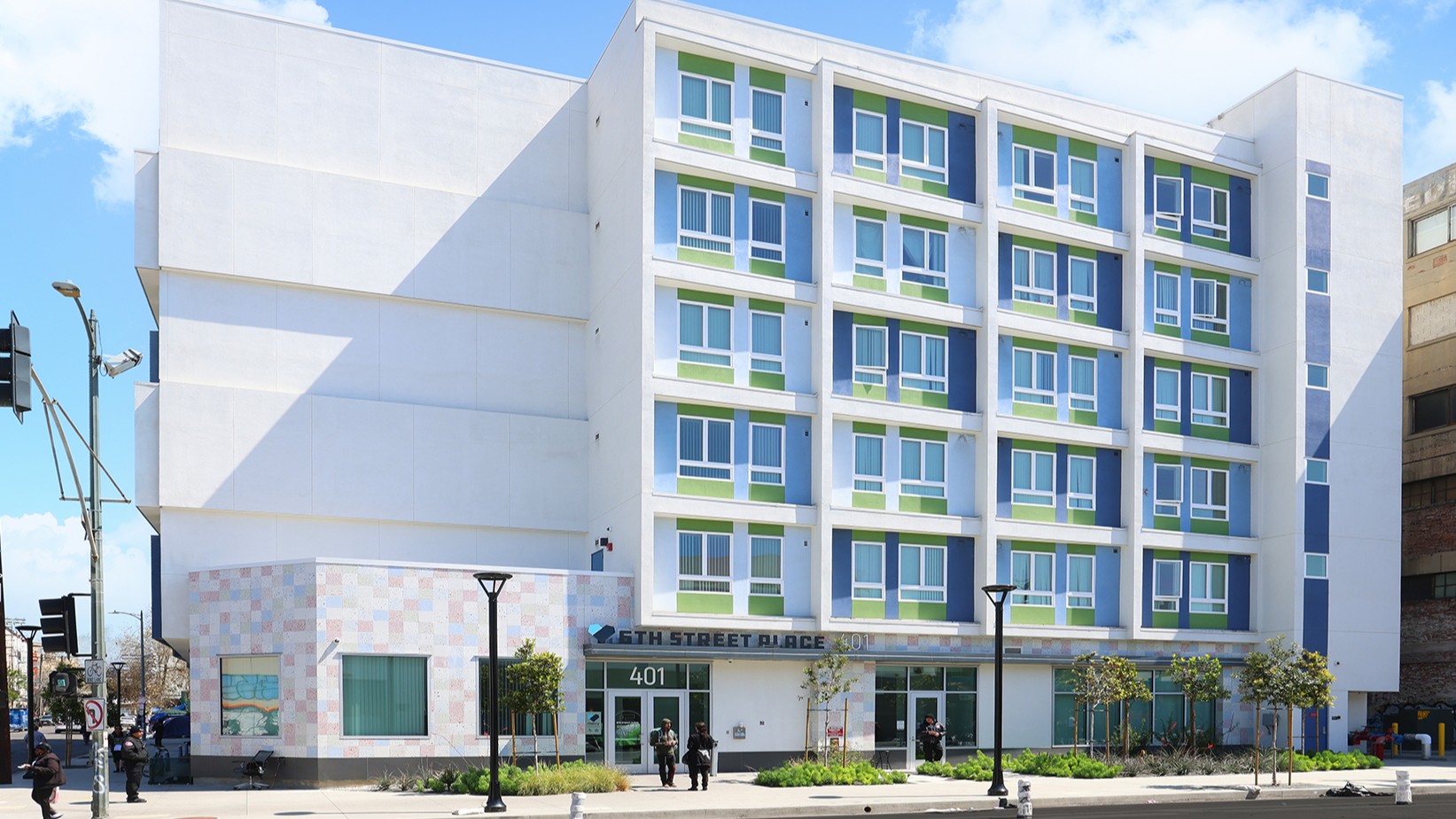
For affordable and workforce housing projects in California, money and space are tight. At Suffolk, we're turning to creative design and construction approaches to help relieve those pressures for clients.
To help nonprofit developers manage the financial risk of building affordable and workforce housing in California’s tight funding environment, Suffolk relies on two strategies in particular: design-build delivery and modular construction. Together, they help projects stay on time and on budget in a market where money and space are both in short supply.
Constructing a new building always involves financial risks. Conflicts between what’s designed and what we can build, unforeseen conditions, changes to scope, and more can create budgetary minefields for developers. These are obstacles that are more painful for nonprofits, which manage many affordable and workforce housing projects with razor-thin margins. Plus, many nonprofits are encountering increased pinch points in the current funding environment. So, how can these organizations relieve the pressure that comes with building in California’s famously tight housing market?
At Suffolk, we’re adapting with economic changes and addressing client needs — both immediate and long-term — to help deliver projects on time and on budget.
Design-build delivery
Design-build is a project delivery method in which a single entity holds the contract for both design and construction, rather than splitting those responsibilities across separate firms. It has quickly risen from an alternative form of project delivery to the fastest-growing and most commonly used project delivery method in the United States. For clients, it can minimize risk by streamlining the contract through a single point of contact and fostering a more collaborative environment.
Suffolk Design, our in-house team of more than 85 licensed architects, professional engineers, and design technologists, works with clients, architects, and our Suffolk operations teams to offer flexible levels of integrated services. Whether Suffolk Design is serving as the architect of record, working as a design integration manager, or offering design-assist solutions, our integrated approach relies on deep technical expertise to improve quality, drive cost predictability, and save time.
This approach keeps everyone accountable to the target budget, and affordable housing projects can benefit significantly from cost model plans that lower their risk. And because we have in-house expertise in both design and construction, we can be a trusted and supportive partner as clients compile their affordable and workforce housing program plans. We’ve seen how to make the money work on numerous other projects across our national portfolio. With that cross-country experience and data from more than 40 years of building, we can dig into the details and help our California clients determine how they can best leverage the funding available.
Modular construction
Compared to design-build delivery, modular construction is newer to the affordable housing scene, and since it’s a more novel approach, there isn’t as much data on it yet. At Suffolk, though, we’ve established ourselves as modular construction leaders thanks to our national presence — using two distinct approaches depending on project needs:
Volumetric modular involves building fully finished, three-dimensional room modules off-site, then transporting and stacking them on-site. Suffolk has used volumetric modular on 6th Street Place (Los Angeles), 3552 Whittier (Los Angeles), 18722 Sherman Way (Reseda), and several healthcare projects in New England
Panelized modular involves building flat wall, floor, and roof panels off-site, then assembling them on-site. Suffolk has used panelized modular on Crenshaw Lofts (Los Angeles) and Union Tower (San Diego).
For each of these projects, Suffolk worked closely with the modular manufacturers to meet or exceed quality and production rate goals. By actively participating in the manufacturing process, providing real-time problem-solving on site, and leveraging our Digital Engineering processes and technologies to ensure the modular units and field conditions are fully coordinated, we were able to speed up schedules and boost quality control — two measures that can save money for nonprofit developers.
As the funding landscape continues to shift, we have to be nimble, innovative, and creative to help developers build this much-needed housing. Fortunately, with experts on the ground throughout the country who cover every aspect of the project lifecycle, we’ll find exactly what clients need to stay ahead.